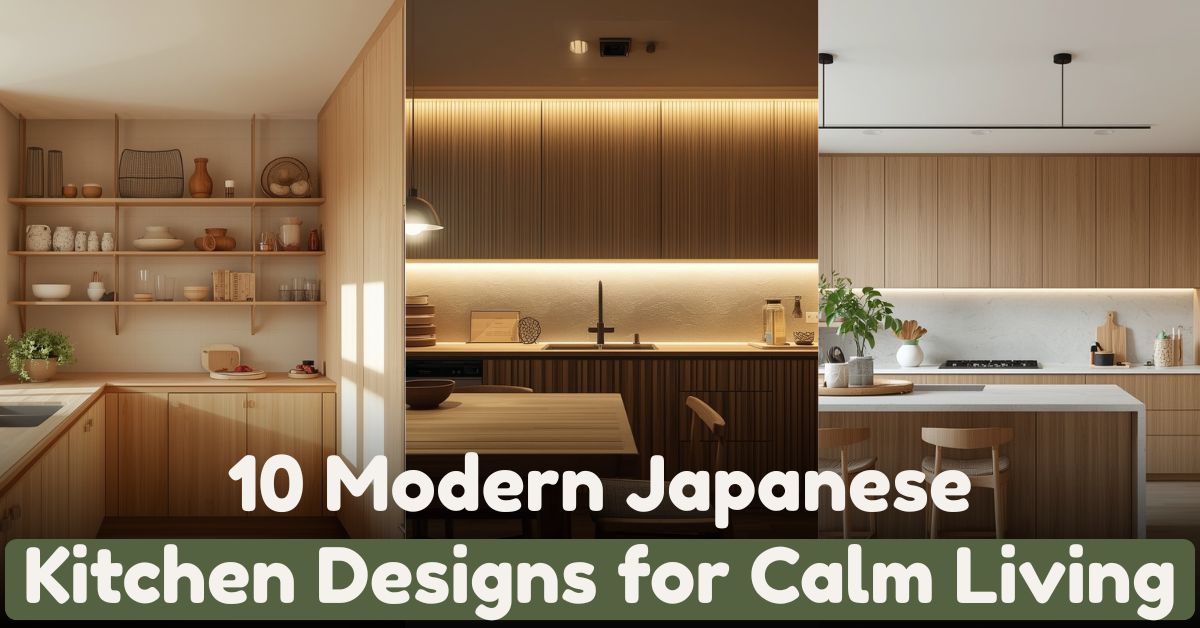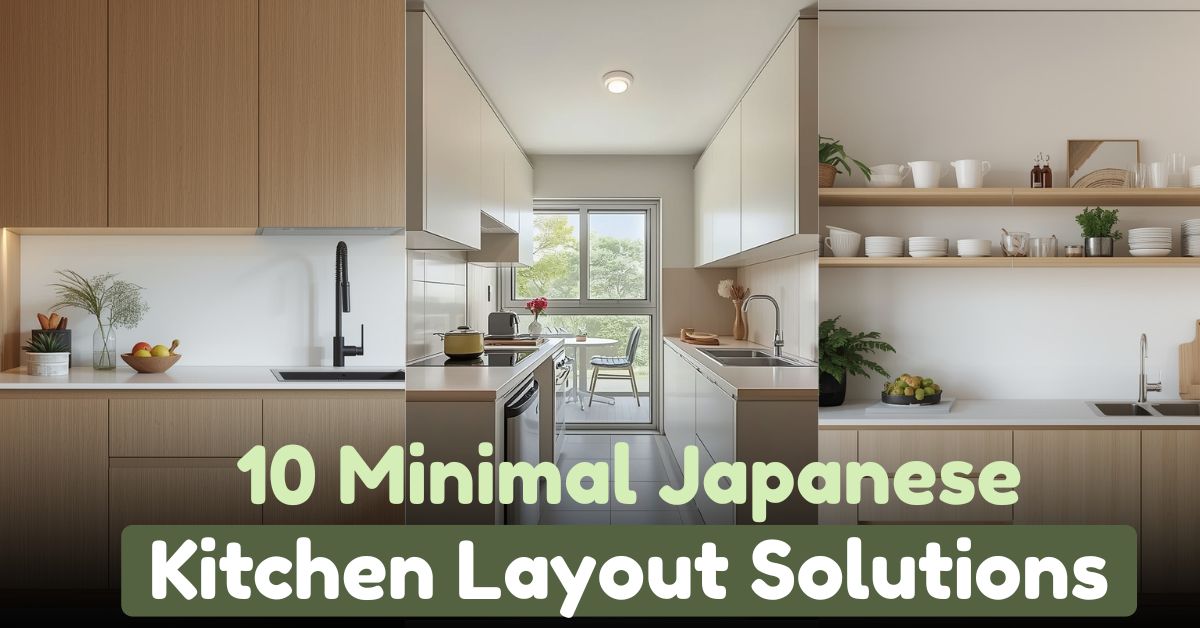
Minimal Japanese kitchens are built around clarity, balance, and simple cooking routines. Many homeowners explore minimal Japanese kitchen layout solutions because they want kitchens that feel quiet rather than crowded.
Japanese design uses natural materials, unobtrusive storage, and streamlined layouts that help daily movement feel easier. This approach works especially well in compact homes where every inch matters and visual calm supports comfort throughout the day.
Modern Japanese kitchen designs focus on subtle beauty. They avoid heavy colors or oversized furniture, choosing instead to highlight wood, stone, and soft lighting. The result is a kitchen that looks peaceful even when it is actively used.
These minimal Japanese kitchen layout solutions help shape spaces with gentle organization and thoughtful proportions, guiding you toward a kitchen that feels practical and balanced without unnecessary clutter.
10 Minimal Japanese Kitchen Layout Solutions
Table of Contents
1. Functional Focal Points Instead of Decoration
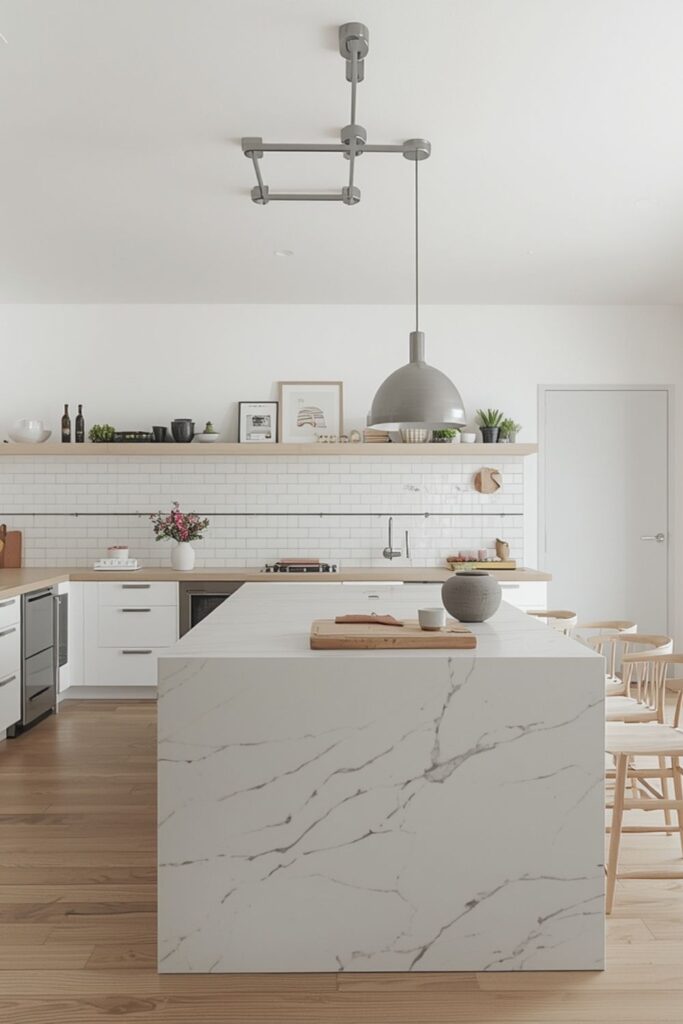
Minimal Japanese kitchen design focuses on function rather than decoration. A single island, a wooden chopping board, or a well-placed vase becomes the focal point in the space. There is no need for excess accessories or heavy decorative elements.
This approach promotes clarity throughout the kitchen. A functional focal point guides movement and supports everyday tasks. It anchors the room while preserving simplicity, allowing the kitchen to feel calm, intentional, and easy to maintain.
2. Slim I-Shaped Kitchen Layout for Narrow Homes
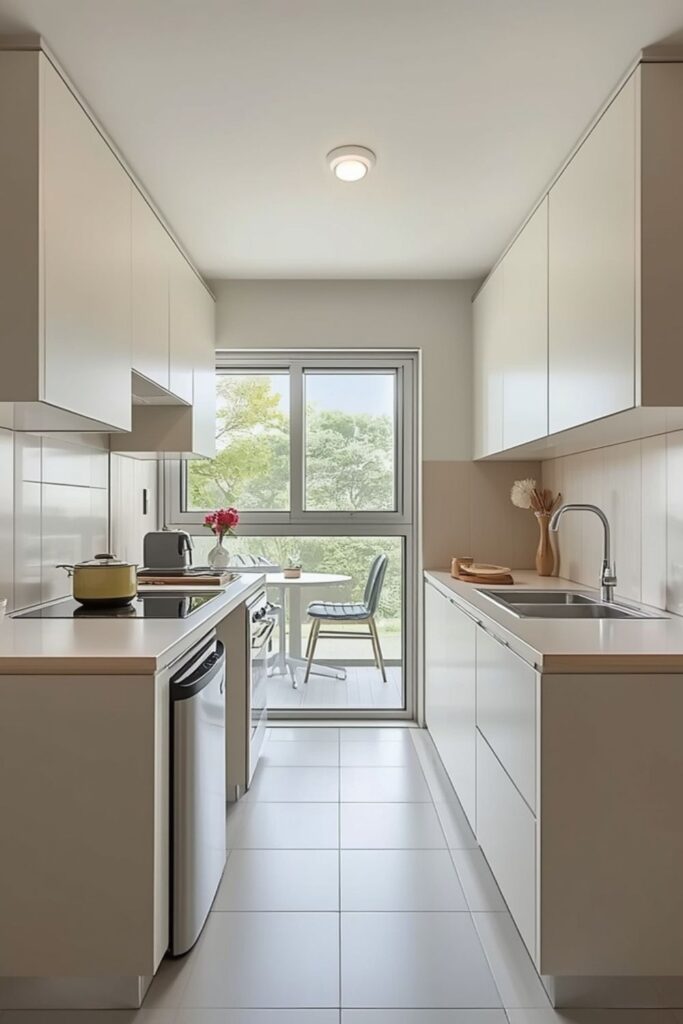
An I-shaped layout is one of the best Japanese small kitchen ideas because it keeps everything in one line. This design works well against a single wall and is ideal for small kitchen layout dimensions. It supports cooking flow without requiring the user to move around too much, making meal preparation efficient.
Small I-shaped kitchen layout dimensions also encourage kitchens to stay clear and uncluttered. The absence of upper cabinets on one side allows natural light to spread evenly through the room. This layout suits apartments and homes with limited floor space, offering practicality in a small footprint.
3. Natural Wood Provides Warmth and Balance
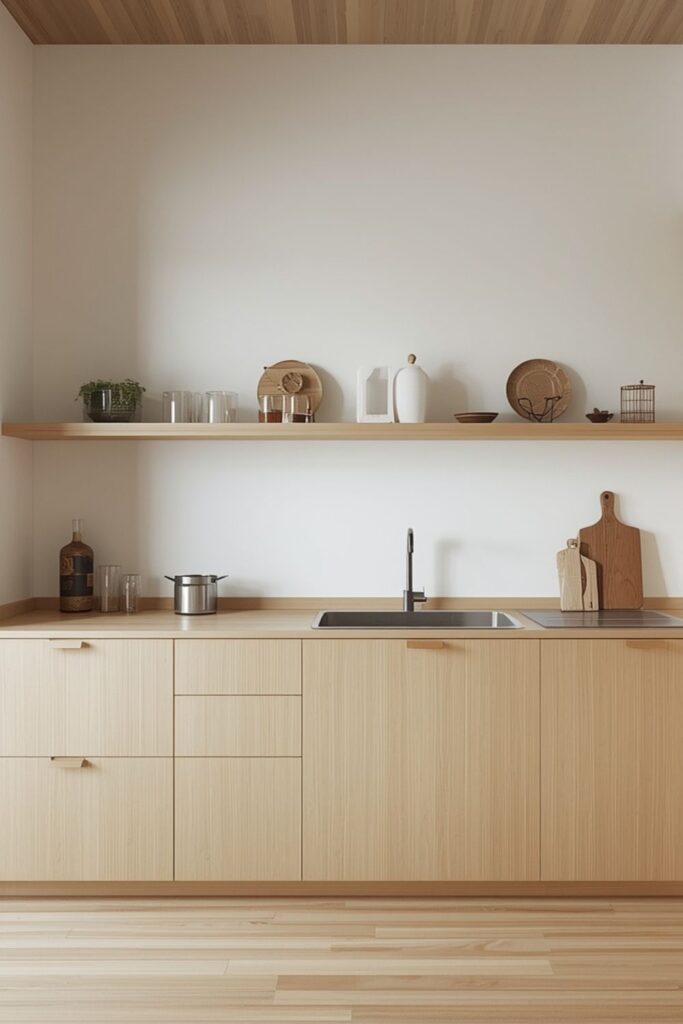
Wood is a fundamental element in Japanese kitchens because it brings softness to minimal interiors. When used for cabinets, shelving, or flooring, natural wood keeps the room from feeling sterile. It introduces warmth without using color, which is central to Minimal Japanese Kitchen Layout Solutions.
Light wood tones pair well with white walls, matte finishes, and soft lighting. This balance helps create kitchens where cooking feels peaceful and comfortable. Even small touches such as wooden handles or a single wooden shelf can introduce calm natural energy into the space.
4. Soft Neutral Colours for Visual Rest
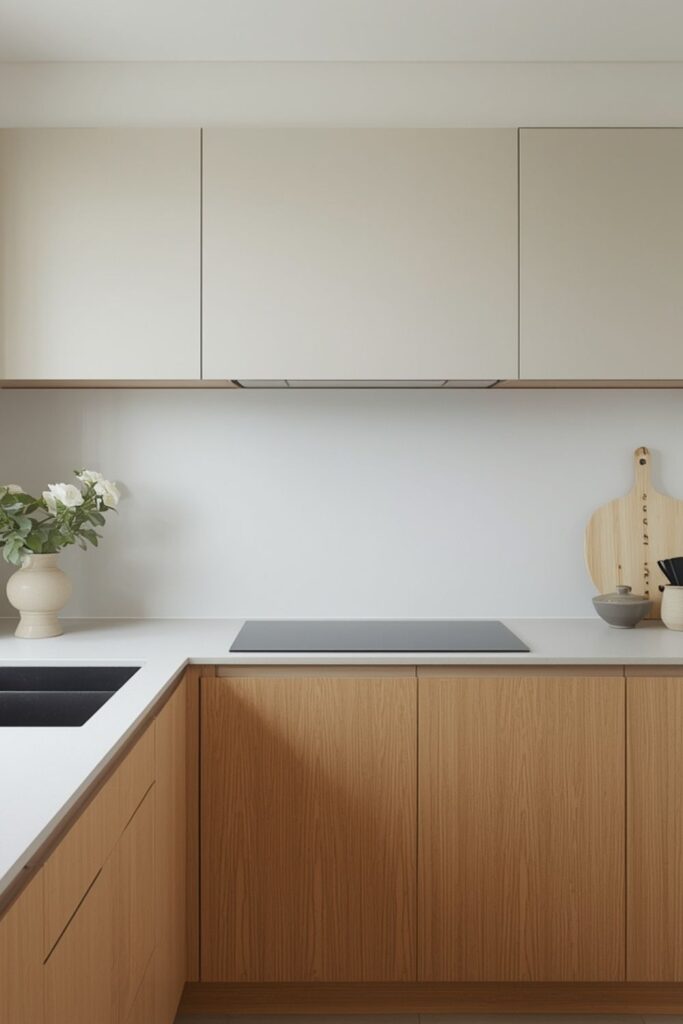
Soft neutrals are used frequently in Japanese kitchens because they create a restful visual environment. Colors such as matte white, sand, cream, and pale grey keep surfaces quiet and allow natural materials to stand out. This palette supports everyday cooking without visual strain.
Minimal Japanese kitchen layout solutions rely on color simplicity to guide the eye gently. Neutral tones reflect light and help small kitchens feel larger. When paired with wood textures, the result is a harmonious and grounded atmosphere.
5. Hidden Storage to Maintain Visual Calm
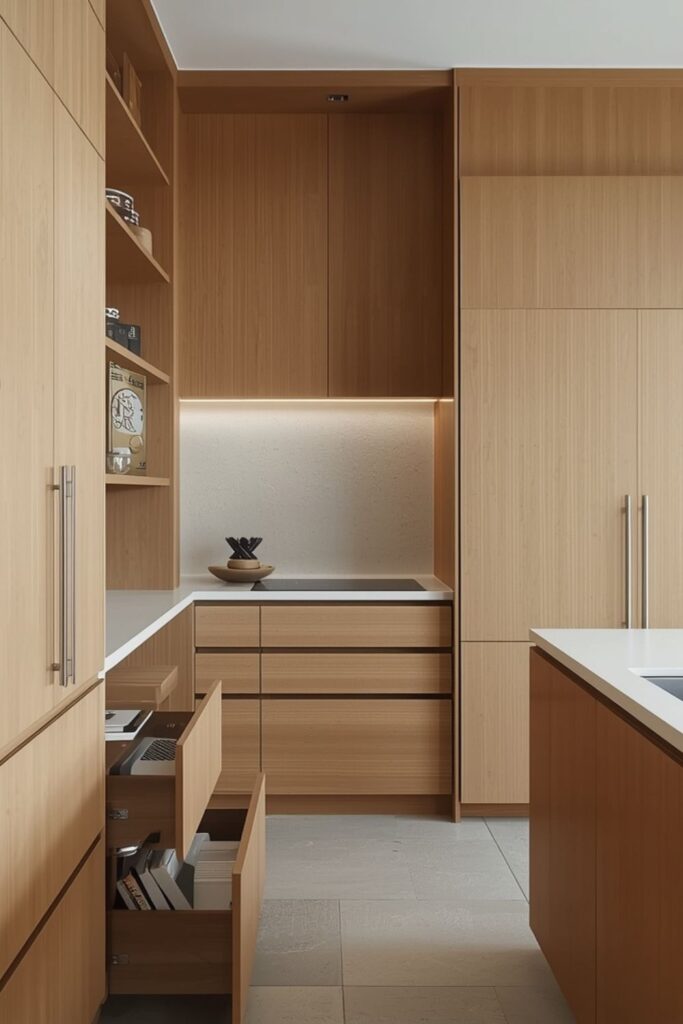
Hidden storage is essential to minimalist Japanese kitchen design because it prevents visual clutter. Deep drawers, sliding pantry systems, or integrated cabinets keep objects out of sight until needed. This approach allows the kitchen to remain visually quiet throughout daily use.
Japanese kitchens often use clean cabinet fronts with no handles and seamless panels to maintain a smooth visual flow. When everything has a place, the kitchen looks organized and feels more enjoyable to use. Hidden storage supports fewer distractions and a deeper sense of calm.
6. Modular Kitchen Units Make Cooking Simple
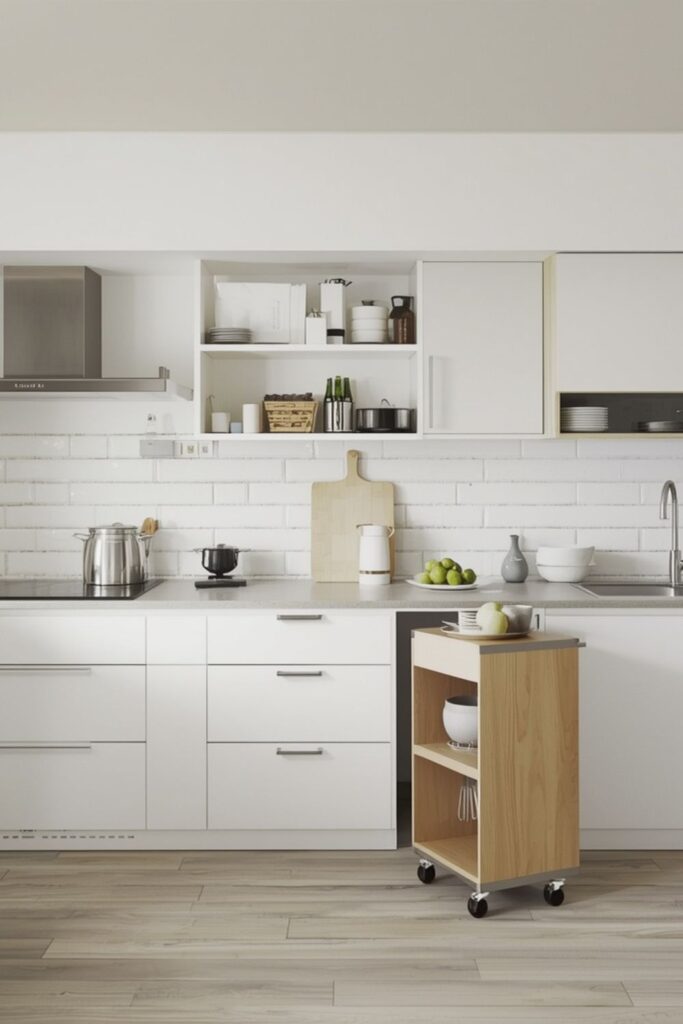
Modular systems offer easy flexibility in minimal Japanese kitchen layout solutions. Modular furniture includes moveable carts, stackable units, or interchangeable storage systems that adapt to changing needs. They work particularly well in small kitchen layouts with minimum dimensions where space must serve multiple purposes.
Modular solutions help maintain tidy surfaces and support easy changes over time. The kitchen becomes functional and efficient without adding permanent elements that might restrict future layout options. This flexibility is highly valued in modern Japanese kitchen design.
7. Compact Sink and Counter Placement
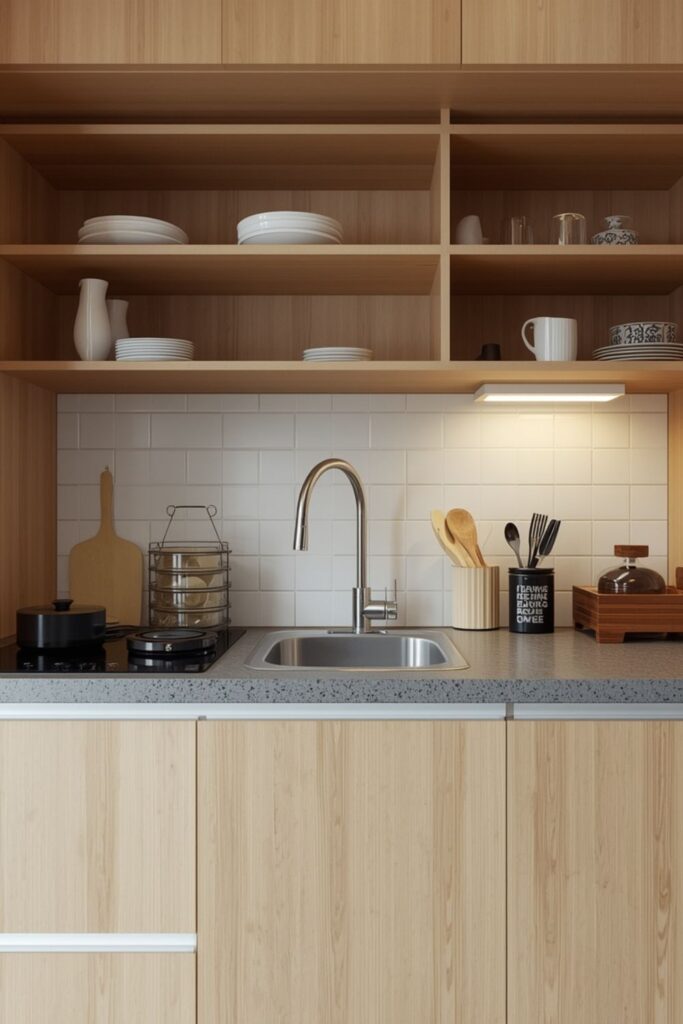
Simplifying sink placement is another technique used in Japanese small kitchen design. By keeping the sink, cooking area, and prep zone close together, movement becomes efficient and practical. Small kitchen layout dimensions benefit greatly from minimal travel distance during food preparation.
Compact layouts also reduce clutter on the countertop. When zones remain close, it becomes easier to clean and manage utensils throughout the day. This improves both appearance and functionality without adding complexity.
8. Minimal Cabinet Hardware for Clean Lines
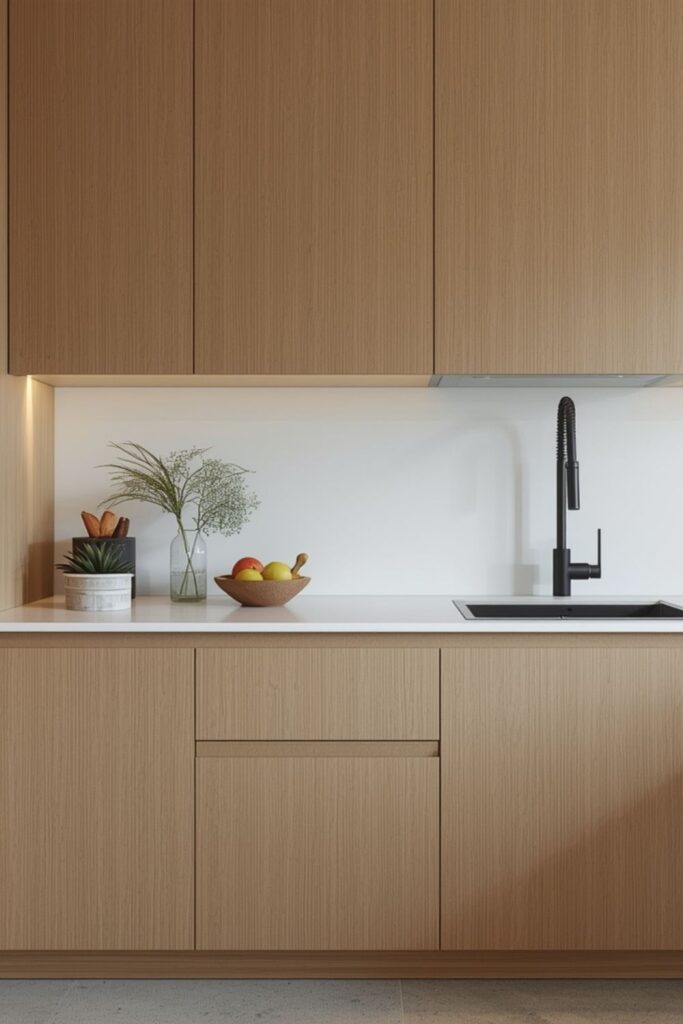
Minimal cabinet hardware supports a consistent design language. Smooth, handleless cabinets or slim metal pulls maintain a clean and subtle appearance. Minimal hardware draws attention to the overall shape of the kitchen rather than individual details.
Many Japanese kitchen layout solutions include cabinets that blend into the wall. This approach keeps the kitchen visually unified and supports natural flow. Hardware becomes nearly invisible, helping small kitchens feel spacious and simple.
9. Soft Lighting to Support Gentle Routine
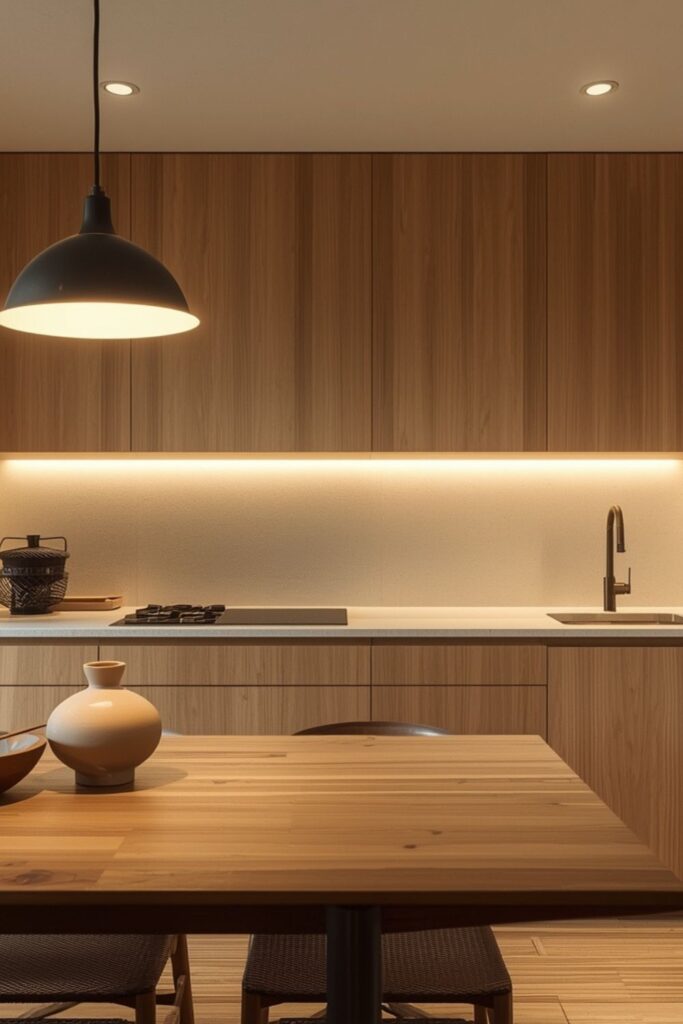
Lighting in minimal Japanese kitchen layout solutions is always warm and comforting. Pendant lights, under-cabinet lighting, or low-profile ceiling fixtures produce a soft glow that supports a relaxed cooking experience. Natural daylight is encouraged whenever possible.
Soft lighting enhances wood textures and makes surfaces feel warmer. When combined with neutral interiors, lighting creates a natural rhythm throughout the kitchen. Evening routines feel calm and unhurried, supporting quiet meals and slow living.
10. Floating Shelving for Light Visual Structure
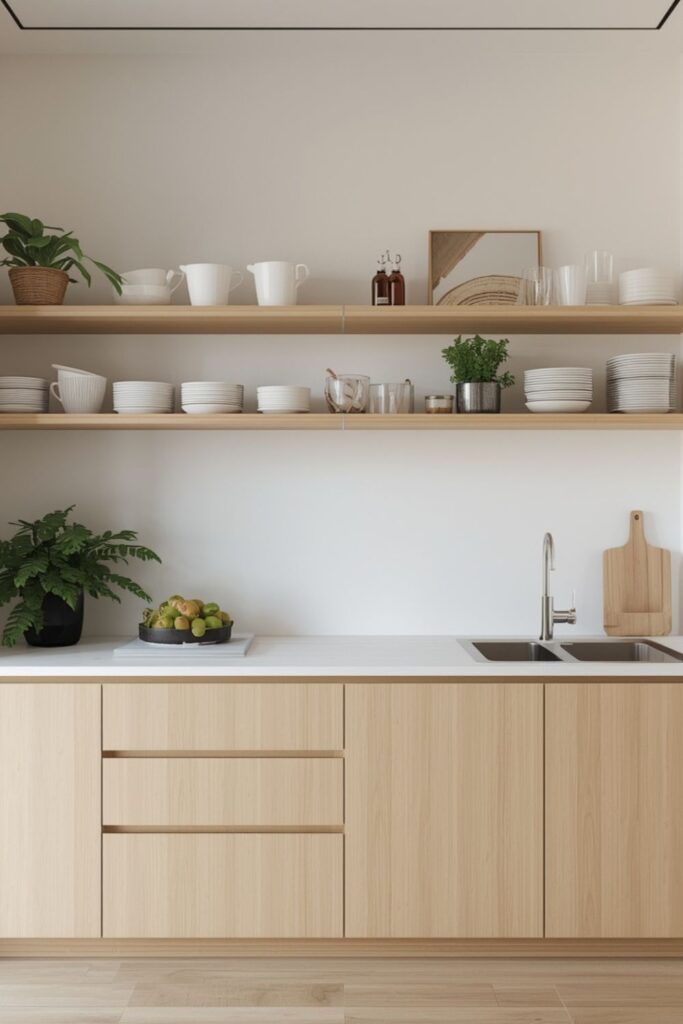
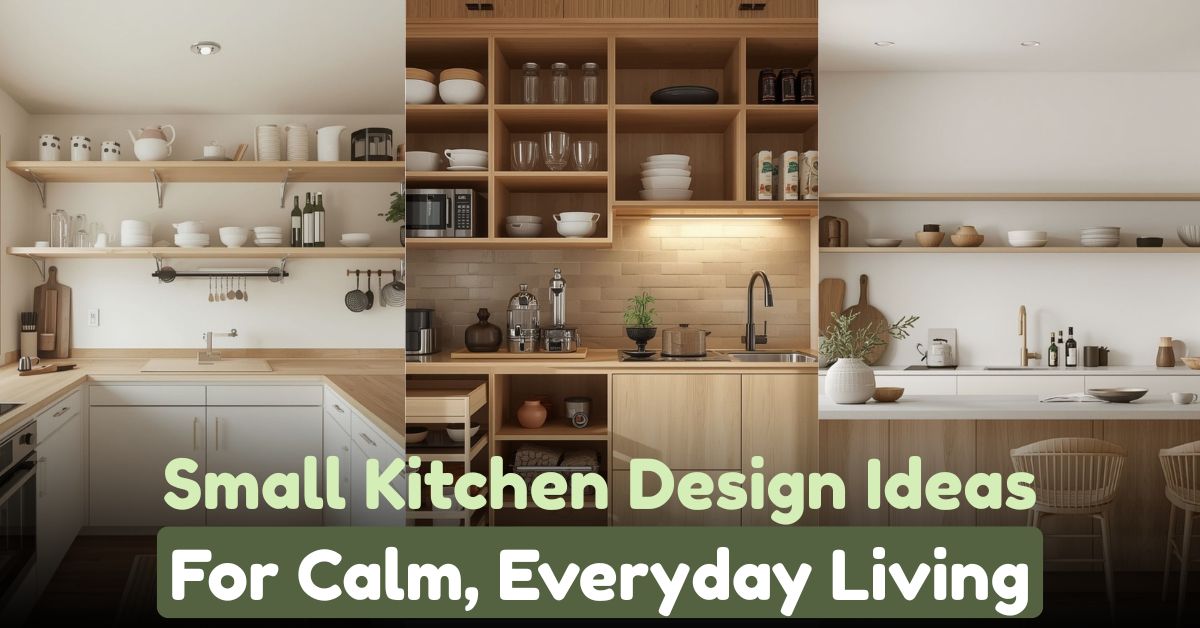
Floating shelves are common in minimal Japanese kitchen layout solutions because they reduce bulk and add gentle structure. Open shelves allow the eye to travel naturally across the wall while still providing storage. They are especially helpful in small kitchens where heavy upper cabinets would feel overwhelming.
In Japanese kitchen design for small space layouts, open shelving encourages mindful organization. Only essential items remain visible, supporting daily use and creating simplicity. The kitchen feels calm as a result, and the space gains a light and airy rhythm that suits everyday cooking routines.
FAQ: Minimal Japanese Kitchen Layout Solutions
Q1. What is the best layout for a small Japanese kitchen?
An I-shaped layout works well in small kitchens because it keeps everything aligned in one zone and minimizes movement during cooking.
Q2. How do Japanese kitchens stay clutter-free?
They use hidden storage, modular cabinets, and simple surfaces to keep everyday items accessible but out of sight.
Q3. Which materials create warmth in minimal Japanese kitchens?
Light natural wood, neutral stone, and soft matte finishes bring gentle warmth and balance without adding bold color.
Q4. What is the ideal lighting for a minimal Japanese kitchen?
Soft, warm lighting, under-cabinet strips, and pendant fixtures create a gentle, quiet visual atmosphere suitable for daily cooking routines.
Conclusion
Minimal Japanese kitchen layout solutions focus on efficiency and calm simplicity. Using natural materials, hidden storage, and thoughtful organization helps create kitchens that feel comfortable to work in every day. These layouts reduce noise and promote clarity, transforming the kitchen into a space where small tasks become enjoyable.
When kitchens embrace minimal design, they invite slower routines and intentional living. A well-designed Japanese kitchen supports quiet morning meals, relaxed evening moments, and an easy flow of movement. With clean lines and balanced materials, minimal Japanese kitchen ideas remain distinct, relevant, and genuinely calming for years.